
Mark Bio Technology / Knowledge library / OEM vs ODM
OEM vs ODM:
what's the difference?
OEM and ODM are the two terms brand owners hear most from factories. Here is a plain-language explanation with a comparison table and how to choose.
What is the difference between OEM and ODM?
OEM (original equipment manufacturing) means the factory makes your existing formula or specification; ODM (original design manufacturing) means the factory develops a new formula from your brief. Mark Bio Technology offers both; formulas developed for your brand belong to your brand, and an NDA is signed before work starts.
OEM vs ODM compared
| Item | OEM | ODM |
|---|---|---|
| Formula | Brand already has it | Factory develops it |
| Best for | Existing products, factory transfer | New brands or products needing a difference |
| Formula ownership | The brand's | At Mark Bio, the brand's (NDA) |
| Lead time | Shorter, formula exists | Includes formulation and samples |
| Transfer from another factory | About 30–90 days depending on the formula | — |
Which should you choose?
- Choose OEM if you have a proven formula or are transferring production from another factory.
- Choose ODM if you have no formula yet, want a unique one, or want innovative ingredients as your selling point.
Many brands start with ODM and build later products on the same base. See R&D and custom formulation.
OEM/ODM with Mark Bio
Both get the same service: Thai FDA registration by our RA team, packaging design, production and lot-by-lot quality checks, with a minimum of 10,000 finished units per formula. See supplement OEM/ODM and cosmetics OEM/ODM.
OEM vs ODM FAQ
Which costs more, OEM or ODM?
It depends more on formula and ingredients than on the model; starting budgets at Mark Bio are from about 1,000,000 THB.
Who owns an ODM formula?
At Mark Bio, the formula developed for your brand belongs to your brand, with an NDA signed before work.
Can I transfer production from my current factory?
Yes, in about 30–90 days depending on the formula, following new-product steps: formula matching, samples, Thai FDA filing and production.
Food supplements are not medicines and do not prevent or treat disease. This content is manufacturing information for brand owners, not medical advice.
Caring with heart. Quality backed by science.
Free production consultation with Mark Bio
MOQ 10,000 finished units · 30–60 days · Thai FDA handled
 10 questions to ask before choosing a supplement or cosmetics OEM factoryAsk these 10 questions before hiring a supplement or cosmetics OEM factory: MOQ and budget, timeline, Thai FDA…
 What is a Double Capsule? The capsule-in-capsule supplement formatA Double Capsule (Double Dual Capsule) is a capsule inside a capsule that keeps two actives apart in one dose.…
 What is a Liquid Capsule? Liquid-filled capsules vs softgelsA Liquid Capsule is a sealed two-piece hard capsule filled with oils or liquid extracts. How it differs from a…
 Jelly stick vs gummy: which format fits your brand?Jelly sticks vs gummies compared on texture, dose per serving, packaging and customers, with tips for choosing…
 Sunscreen ISO standards: what each one measures and howWhat an ISO-tested sunscreen means. Every ISO sun protection standard compared: ISO 24444, ISO 23675 (Double P…
 How to start a supplement brand in Thailand: 5 things to know firstStarting a supplement brand in Thailand? 5 keys: target market, formula and format, Thai FDA, budget and MOQ 1…
 How to choose a supplement manufacturer in Thailand (and avoid getting burned)Which supplement factory in Thailand should you choose? A 7-point checklist: certifications, R&D, Thai FDA, ND…
 How to choose a trustworthy cosmetics manufacturer in ThailandWhich cosmetics factory in Thailand can you trust? Six checks: GMP and ISO 22716, R&D, SPF and skin testing, T…
 How much does it cost to start a cream brand?How much does a cream or skincare brand cost to start? From about 1,000,000 THB with 10,000 finished units; th…
 Building a legal supplement brand in ThailandHow to build a legal supplement brand in Thailand: 13-digit Thai FDA number, what the label must show, adverti…
 Supplement and skincare trends brand owners should knowSupplement and skincare trends brand owners should know: longevity, gut health, sleep, plant protein, easy for…
 How long does supplement manufacturing take?How long does it take to manufacture supplements in Thailand? Thai FDA about 15–30 working days, production ab…
 Supplement registration vs cosmetic notification in ThailandSupplement registration (13-digit food serial number) vs cosmetic notification (10-digit) in Thailand: authori…
 GHP, HACCP, ISO 22000, GMP, ISO 22716 and HALAL explainedGHP, HACCP, ISO 22000, GMP, ISO 22716 and HALAL explained: what each standard covers, how they differ, and why…
 R&D and custom formulation for your brandMark Bio's supplement and cosmetic R&D teams develop unique custom formulas, from ingredient choice and sample…
 Research-backed innovative ingredientsWhat research-backed (clinical study) ingredients are, how to choose them, and the imported ingredients Mark B…
 What is liposomal technology in supplements?What liposomal technology is, how liposomal ingredients differ, what you can and can't claim, and making suppl…
 Probiotics vs prebiotics: a guide for supplement brandsProbiotics, prebiotics and synbiotics explained for supplement brands: Thai FDA strain rules, formats you can …
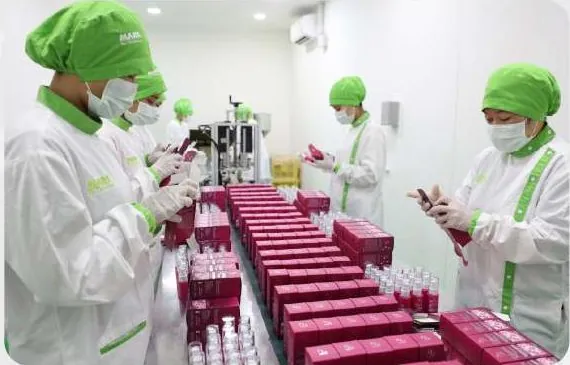 Packaging and label designPackaging and label design for supplement and cosmetic brands, with sourcing of bottles, boxes and tubes, Thai…
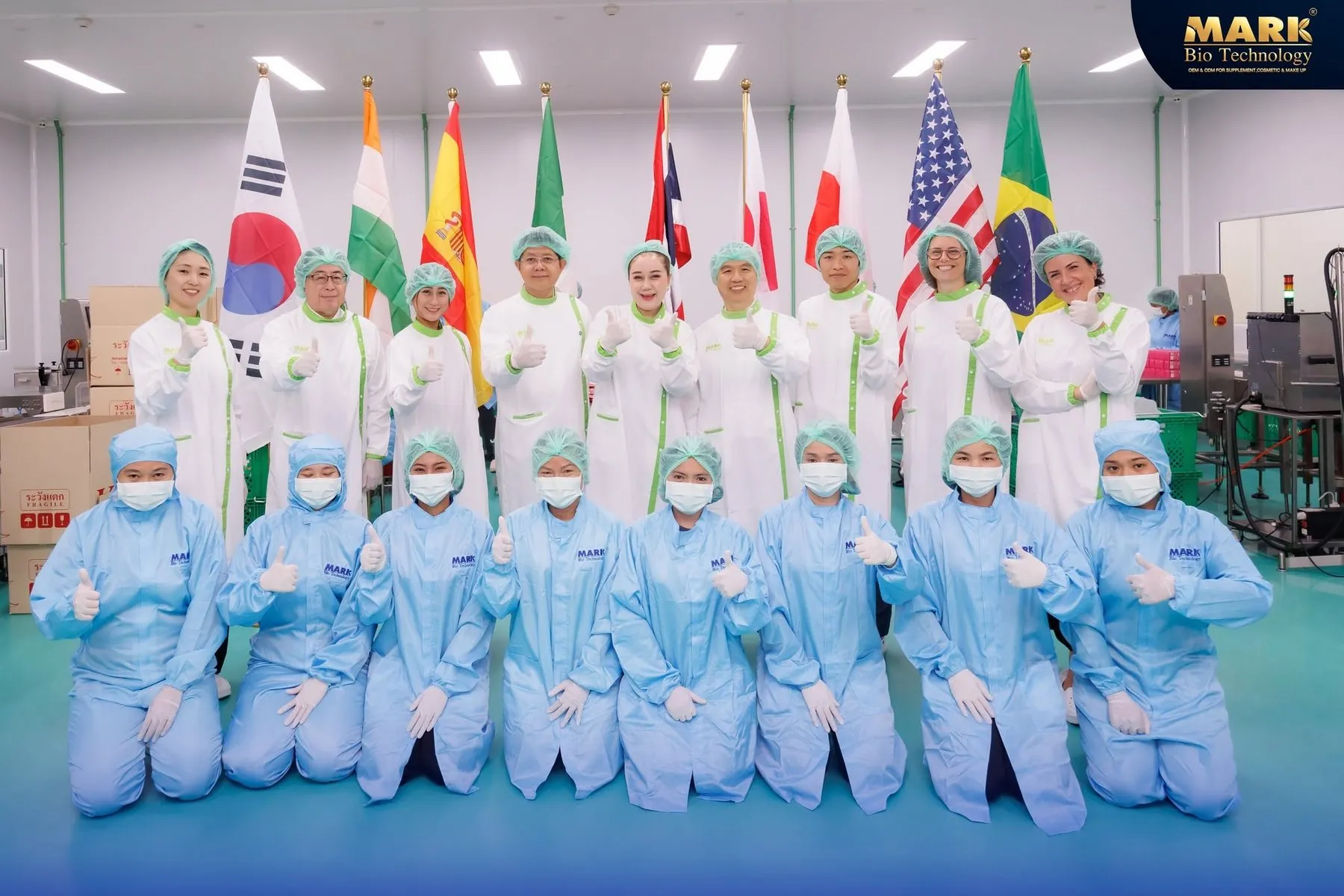 Supplement and cosmetic manufacturing for exportManufacturing supplements and cosmetics for export from Thailand: Certificate of Free Sale, COA, HALAL (supple…
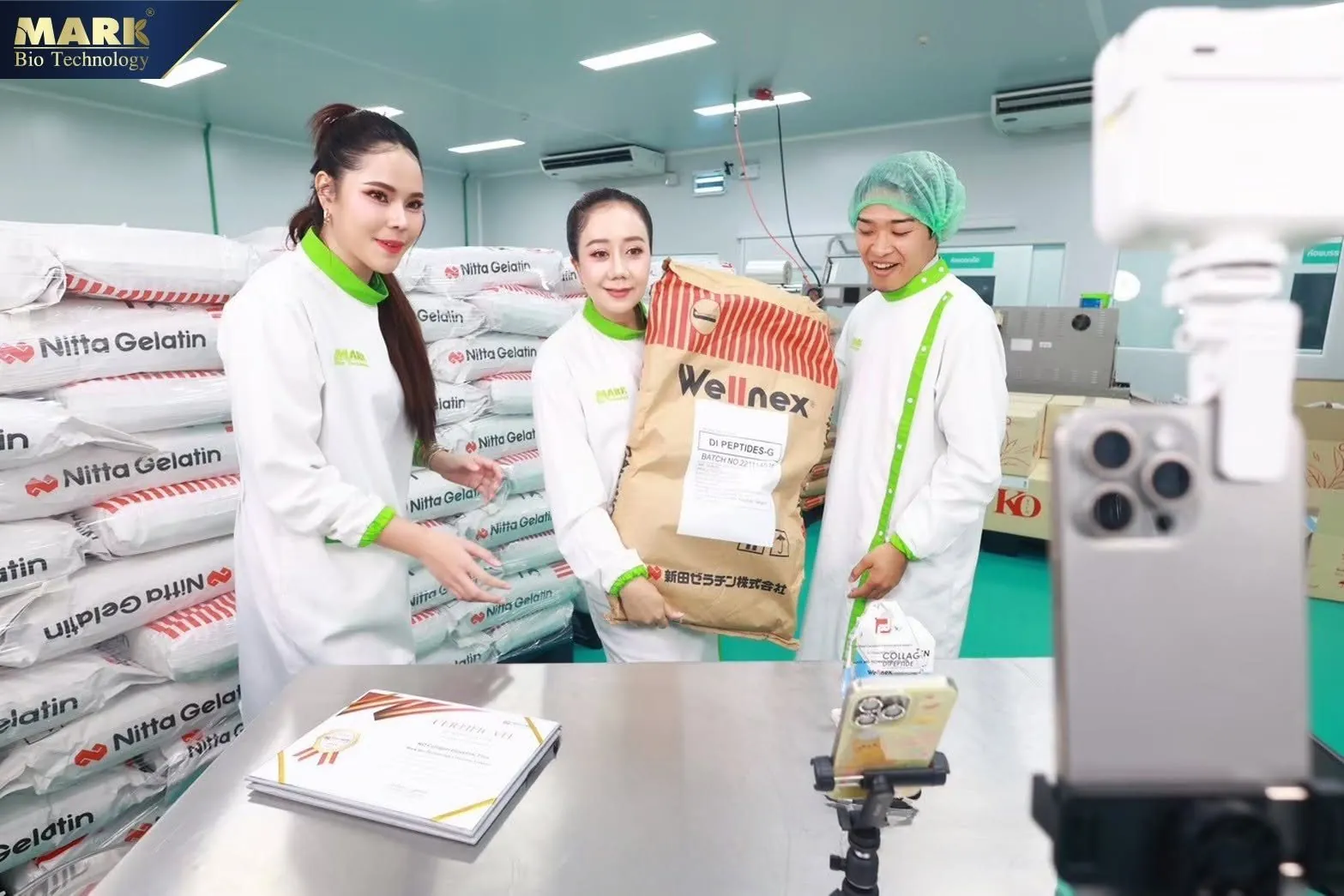 Supplement MOQ explained: what is the minimum order?What is the minimum order for supplements and cosmetics? At Mark Bio, 10,000 finished units per formula (ready…